The best of four decision methods
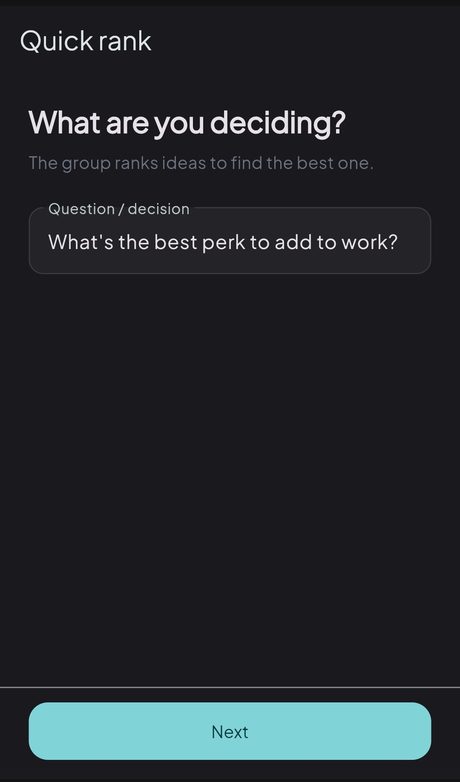
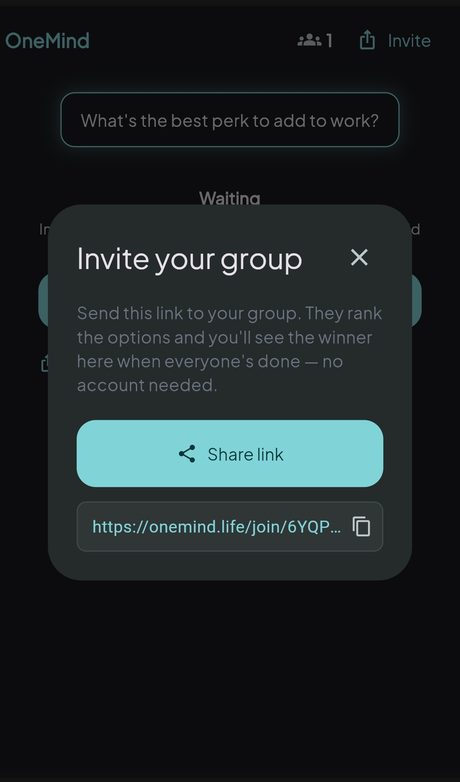
OneMind isn't a new way to decide — it's a remix. It takes the reliable part of the Delphi method, Nominal Group Technique, deliberative democracy, and pairwise voting, and drops the one thing each gets wrong. Here's exactly how the engine works.
See OneMind in 60 seconds
Every proven decision method is also broken in one specific way
Delphi converges, but it's slow and manual. Nominal Group Technique kills groupthink, but it doesn't scale or iterate. Deliberative polling gives everyone equal voice, but it needs moderators and never actually produces a decision. So in practice people skip all of them and just run a meeting or a poll. OneMind keeps the reliable half of each and runs the whole loop automatically.
How it works
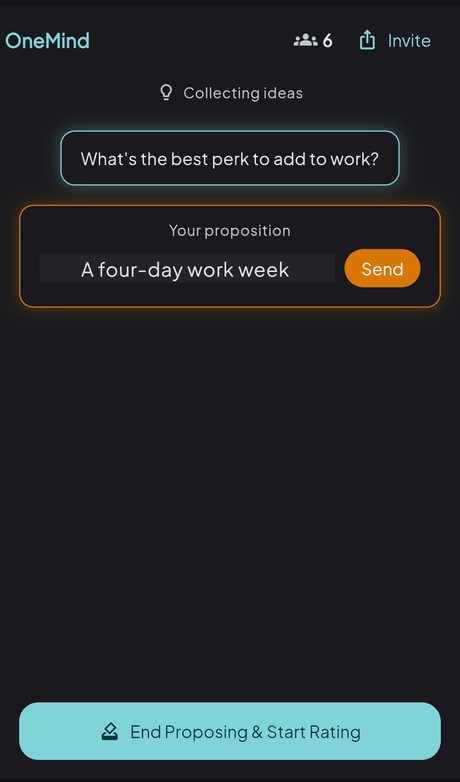
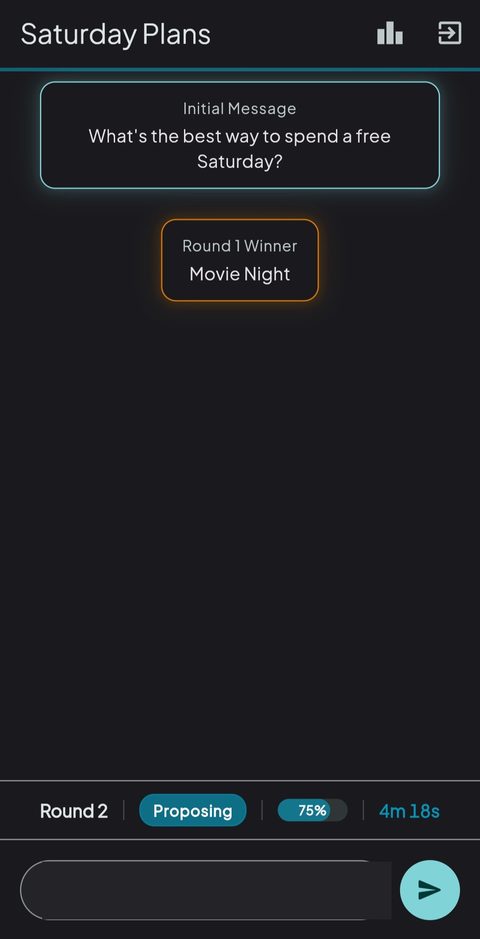
- Independent ideas (from NGT). Everyone proposes privately before seeing anyone else's idea — the step that kills anchoring, the loudest voice, and groupthink. No one's thinking is contaminated by hearing yours first.
- Iterate to convergence (from Delphi). The group rates, a winner emerges, and the round repeats. When the same answer wins across rounds, that's genuine convergence — Delphi's signature loop, run automatically instead of by email.
- Equal voice, real decision (from deliberative democracy). Every participant's input counts the same, and the loop ends in an actual outcome — not just a visualization of who agrees with whom.
What makes OneMind different
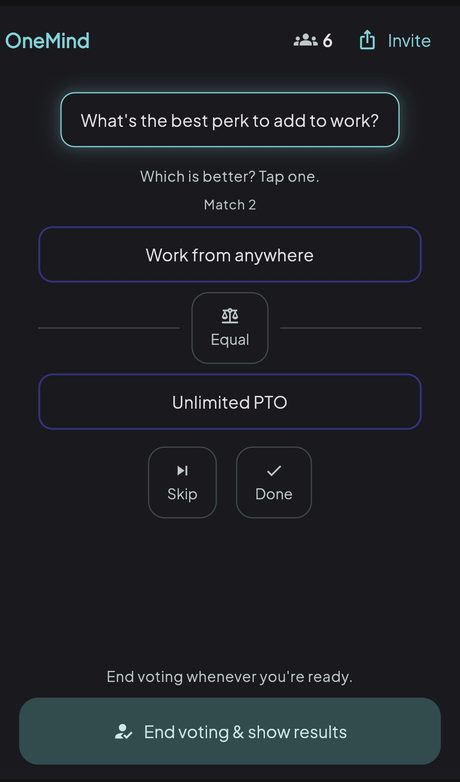
- Rated two at a time (pairwise voting). You never score anything 0–100. You just answer "A or B?" — the one judgment humans are reliable at. A Bradley-Terry/Elo fit turns those taps into a full ranking. One-tap input is what lets a real group actually finish.
- Anonymous throughout. No one knows who proposed or rated what. Ideas compete on merit, not seniority or volume — the shared principle behind Delphi and NGT.
- No facilitator, no spreadsheets. OneMind runs the rounds, the tally, and the convergence check. What used to take weeks of manual facilitation happens in one sitting.
OneMind vs. the methods it's built from
| Meeting | Poll | Delphi | NGT | OneMind | |
|---|---|---|---|---|---|
| Everyone proposes (not just the loudest) | ✗ | ✗ | ✓ | ✓ | ✓ |
| Anonymous — merit over status | ✗ | ✓ | ✓ | ~ | ✓ |
| Iterates until it converges | ~ | ✗ | ✓ | ✗ | ✓ |
| Every voice weighted equally | ✗ | ✓ | ✓ | ✓ | ✓ |
| One tap, no scales or essays | ✗ | ✓ | ✗ | ✗ | ✓ |
| Ends in a clear decision | ~ | ✓ | ✓ | ✓ | ✓ |
See the whole loop in one sitting.
Run a real group decision free — no account, start in 30 seconds.